
La fluidité en perspective : 6e année
Cet ensemble de textes a été conçu pour l’enseignement de la fluidité en 6e année. Pour chaque texte, il y a une fiche de référence et des diapos pédagogiques.
Cet ensemble de textes a été conçu pour l’enseignement de la fluidité en 6e année. Pour chaque texte, il y a une fiche de référence et des diapos pédagogiques.
This is a collection of passages designed to be used for fluency instruction in grade 6. The passages are purposefully written to flexibly support a variety of different instructional routines (Quick Fluency Routine, repeated reading, partner reading/paragraph shrinking). Each text has an associated Educator Resource and Instructional Slide deck.
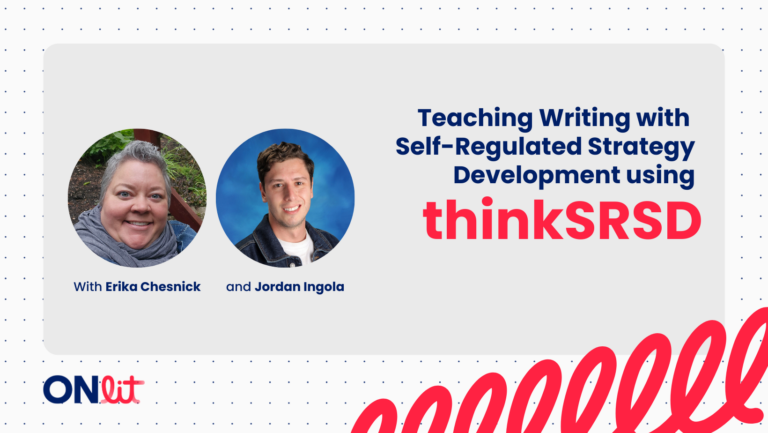
Catch up on this ONlit recording featuring Ontario educators Erika Chesnick and Jordan Ingola. In this session, Erika and Jordan provided a high-level overview of the thinkSRSD approach to teaching writing, along with real-life examples from Ontario classrooms. This webinar offered educators an opportunity to deepen their understanding of thinkSRSD and shared practical strategies they…
The Introduction to Grade 3 guide provides educators with a clear and comprehensive foundation for understanding the instructional priorities and literacy expectations of Grade 3. It outlines curriculum expectations and explains key components of literacy learning, including vocabulary development, increasingly complex comprehension strategies, consolidation of reading and writing skills, and the integration of media literacy….
The Introduction to Grade 1 guide is a comprehensive starting point for educators navigating the foundational year of literacy instruction. It clearly outlines the Grade 1 curriculum expectations, explains key components such as phonemic awareness, phonics, vocabulary, reading comprehension, and writing development, and highlights practical research-supported strategies educators can use in day-to-day instruction. The guide…
The Introduction to Grade 2 guide is a comprehensive foundation for educators as they navigate the instructional priorities and literacy expectations of Grade 2. It clearly outlines curriculum expectations and explains key components. The guide provides research-supported approaches and practical strategies educators can use in day-to-day instruction to strengthen students’ literacy skills and promote confident,…
ONlit’s Kindergarten Welcome Page provides educators and school leaders with a clear introduction to how early literacy is supported across the Kindergarten years. The page outlines the focus of literacy learning in Kindergarten, including oral communication, emergent reading and writing behaviours, and vocabulary development, and explains how these components are developed through everyday classroom experiences….
Learning Through Literacy is ONlit’s approach to integrated structured literacy instruction aligned with the Ontario Language Curriculum. Each grade level includes a selection of connected practices that show students how language, literacy, and curriculum areas work together through engagement with meaningful, Canadian content. Across the resource, educators will find features such as high-quality mentor texts,…
Le Survol de la littératie en 1re année constitue un point de départ solide pour le personnel enseignant qui accompagne les élèves au cours de cette année charnière du développement de la littératie. Il présente clairement les attentes du programme-cadre de la 1re année et explicite les composantes clés de l’apprentissage, notamment la conscience phonologique,…
Le Survol de la littératie en 2e année constitue une base solide pour le personnel enseignant appelé à composer avec les priorités pédagogiques et les attentes en littératie propres à la 2e année. Il présente clairement les attentes du programme-cadre et explique les composantes clés de l’apprentissage. Le guide propose des approches appuyées par la…
Le Survol de la littératie en 3e année offre au personnel enseignant une base claire et complète pour comprendre les priorités d’enseignement et les attentes en littératie propres à la 3e année. Il présente les attentes du programme-cadre et précise les composantes clés de l’apprentissage en littératie, notamment le développement du vocabulaire, l’utilisation de stratégies…
Apprendre, lire et grandir est l’approche d’ONlit visant à offrir un enseignement intégré et structuré de la littératie, en cohérence avec le Programme-cadre de français de l’Ontario. Pour chaque année d’études, cette approche propose un ensemble de ressources pratiques et interreliées montrant comment le langage, la littératie et les domaines d’apprentissage s’articulent autour des contenus…